Sweyn Forkbeard: First Viking King of England
Sweyn Forkbeard: birth c.960/crowned King of Denmark 986; King of England for five weeks in 1013; King of Norway 999-1014/death 1014
Spouse(s): Świętosława/Sigrid/Gunhild
House: Knýtlinga/Father, Knut Danaást or Harald Bluetooth/Mother, Tove or Gunhild
Children: Harald II of Denmark, Cnut the Great, Estrid Svendsdatter

The annals of medieval European history are replete with remarkable figures who shaped the continent’s political landscape, and among these, Sweyn Forkbeard (Old Norse: Sveinn tjúguskegg) stands as a towering historical personality. Born around 960 CE in the heart of Viking Denmark, Sweyn emerged as a pivotal monarch whose military prowess and political acumen would fundamentally transform the geopolitical dynamics of late 10th and early 11th-century Scandinavia and Anglo-Saxon England. Source: Paganheim
Historians researching the life of Sweyn Forkbeard rely on several primary and secondary sources, including:
- The Anglo-Saxon Chronicle: This provides accounts from the English perspective during Sweyn’s raids and invasions of England.
- Adam of Bremen’s Gesta Hammaburgensis Ecclesiae Pontificum (Deeds of the Bishops of Hamburg): This 11th-century work offers a continental European perspective, though it may contain biases against Sweyn.
- Snorri Sturluson’s 13th-century Heimskringla: This collection of sagas offers a Norse perspective on the lives of Scandinavian kings, including Sweyn Forkbeard.
- Encomium Emmae Reginae: An 11th-century Latin encomium in honor of Sweyn’s son King Cnut’s queen Emma of Normandy, which also provides details about Sweyn’s later life.
- Chronicon ex chronicis by Florence of Worcester: Another 11th-century chronicle that details events during Sweyn’s time.
- Coins minted during Sweyn’s reign: These provide tangible evidence. The earliest known coin with a Latin inscription minted in Scandinavia attributed to Sweyn Forkbeard is dated 995.

A coin of Sweyn Forkbeard, minted in 995; this is the earliest known coin with a Latin inscription minted in Scandinavia, based on Anglo-Saxon models and made by an English moneyer (obv.: ZVEN REX AD DENER“Sven, king of [or among] the Danes”, rev.: GOD-WINE M-AN D-NER “Godwine, moneyer among the Danes”). Source: https://www.nationalbanken.dk/en/what-we-do/notes-and-coins/historical-coins
We will try to build an accurate picture of Sweyn Forkbeard as best we can with the understanding that the above sources offer contradictory or differing accounts, especially regarding details like Sweyn’s heritage or motivation behind certain actions.
Forkbeard is one of history’s most successful but forgotten kings, the first Viking King of England. Most people have only heard of his son, Cnut the Great who was famous for forging the North Sea Empire and controlling tidal waves. But Sweyn Forkbeard was the man who made everything possible for Cnut.
Forkbeard was born in Denmark around 960 to Harald Bluetooth, the legendary Danish king who was instrumental in Denmark’s Christianization. The late 10th century represented a critical period of transition for Scandinavian societies. Viking culture, traditionally characterized by maritime raiding and trading expeditions, was gradually evolving towards more structured monarchical systems. Kingdoms were becoming centralized, and rulers were navigating the delicate balance between traditional Norse practices and emerging Christian political frameworks.
Sweyn’s father Harald had been raiding southern England including Southampton, Devon, Cornwall and Dorset over a period of four years, and due to his father’s absence Sweyn was raised by the Jomsvikings: a legendary order of well-organized Viking mercenaries, who reputedly would fight for any ruler or lord with enough money to pay their substantial fee. Sweyn was mentored by Palnatoke (pictured below), a legendary Danish chieftain and staunch supporter of the old pagan faith, which conflicted with Harald Bluetooth’s conversion to Christianity.

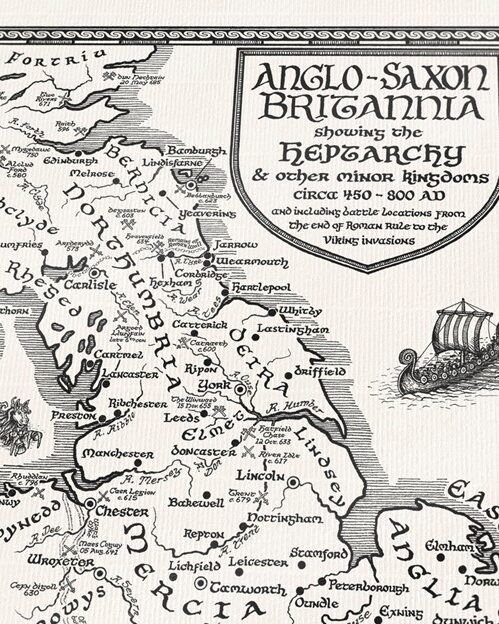
From an early age, Sweyn demonstrated excellence in both leadership and warfare and in around 986, he joined Palnatoke’s forces rebelling against his father’s religious reforms and successfully seized the thrones of Denmark and Norway for himself. His ambition did not end there. In 994, at the age of thirty, joined by Olaf Tryggvason of Norway, Forkbeard led a fleet of ninety-four galleys to the gates of London on the feast day of St. Mary, September 8th. Unable to bridge the walls of London, they advanced on the coasts of Essex, Kent, and Sussex (see below).

The Chronicle describes the horror of Sweyn and Olaf’s rampage through England recording “a catalogue of destruction, listing towns and manors throughout the country which were plundered and burned by the Danes.” In the year 1001, the chronicler comments that the army “travelled around just as they chose, and nothing could withstand them… In every way it was a heavy time, because they never ceased from their evil.“
These were not indiscriminate raids: the Danes seem to have been able to identify and exploit areas where internal disputes among the English leadership made them especially vulnerable. In 1003, for instance, the Chronicle notes that cowardice led one of the English commanders to feign illness and disperse the army; Sweyn ‘saw they were not resolute’ and led his forces to burn down the town of Wilton in Wessex. Such failures of decisive action on the English side repeatedly gave the Danes an advantage, at least in the eyes of the chronicler, who records their assaults year after year with a kind of grim bitterness. [Source: Rounded Globe]

“The Briton’s foe, he who held wide lands, who knew no fear, in no wise drew back from the fierce, swift doom of Hethin’s warriors. In a true sense he made many a weapon to be reddened in blood. The din of swords grew loud about the prince, so I am told.”
Hallfreth, Óláfsdrápa (“Dirge for Olaf”)
Source: Olaf Tryggvason

Invasion of England by the Danes
The English King Æthelred the Unready, counseled by his nobles sought a desperate resolution to the Danish invasion. He sent envoys to the marauding Vikings offering them tribute and regular payments (Danegeld} in exchange for an end to their assaults. Sweyn and Olaf agreed to the terms, withdrew their ships and assembled their forces at Southampton where they chose to winter. Their payoff (historians believe to be sixteen thousand pounds in gold and silver) came from collecting taxes throughout England, with Wessex bearing the brunt of the cost. While Sweyn continued to accrue wealth and govern Denmark with an iron fist, Olaf ascended to the throne of Norway, driving out or killing those who clung to pagan beliefs and transforming Norway into a Christian nation.
As he was forcibly ridding Norway of ancient Norse ways, enmity was brewing between Olaf and his former ally Forkbeard. First of all, the reason Forkbeard teamed up with Olaf in the first place was to preserve the ancient Norse ways from which his father was turning. According to the Icelandic historian Snorri Sturluson, the animosity continued when Forkbeard’s sister married Olaf against her brother’s wishes. Their hatred culminated in the Battle of Svolder where Olaf in his Long Serpent was crushed by the forces of King Sweyn Forkbeard of Denmark, King Olof Skötkonung of Sweden, and Earl Eirik of Lade.

Allies to adversaries: Olaf of Norway (left) and Svein Forkbeard of Denmark (right) had been partners in the pillage of England before becoming enmeshed in a turf war in Scandinavia. Illustration From Mary Macgregor, Stories Of The Vikings (1908) Source: U.S. Naval Institute

The Battle of Svolder, at which the Jomsvikings fought with Denmark against Norway, maybe with a swap of allegiance to side with Forkbeard’s advantage, of his 400 ships to Tryggvason’s 100. Source: Wikimedia Commons

Source of picture: On This Day
Following The Battle of Svolder, the victorious leaders divided Norway among themselves.
The Battle of Svolder (or Svold) would determine the fate of kingdoms and pit erstwhile allies against each other in a bitter power struggle: Olaf Tryggvason—the ruler renowned for bringing Christianity to Norway—and Svein Forkbeard, the Viking warrior-King of Denmark.
After the Battle of Svolder, Norway was divided among the victorious leaders: Olaf the Swede, Sweyn Forkbeard of Denmark, and Eirik Hákonarson, Jarl of Lade.
The division, according to the Heimskringla saga, was as follows:
- Eirik Hákonarson ruled the largest portion of Norway as a vassal of Sweyn Forkbeard. This portion of Norway included three provinces.
- Sweyn Forkbeard took possession of the Viken district, an area where Danish influence was already strong.
- Olaf the Swede received four districts in Trondheim, as well as Møre, Romsdal, and Rånrike. He entrusted these to his son-in-law, jarl Svein Hákonarson, to hold as a vassal.
The Battle of Svolder and the subsequent division of Norway had significant consequences for the region. It brought an end to King Olaf Tryggvason’s attempts to unify Norway under Christian rule and strengthened Danish and Swedish influence in the region. Realizing that so many of his countrymen had been forced-fed religious beliefs depending on their current ruler, Sweyn granted his subjects religious freedom.
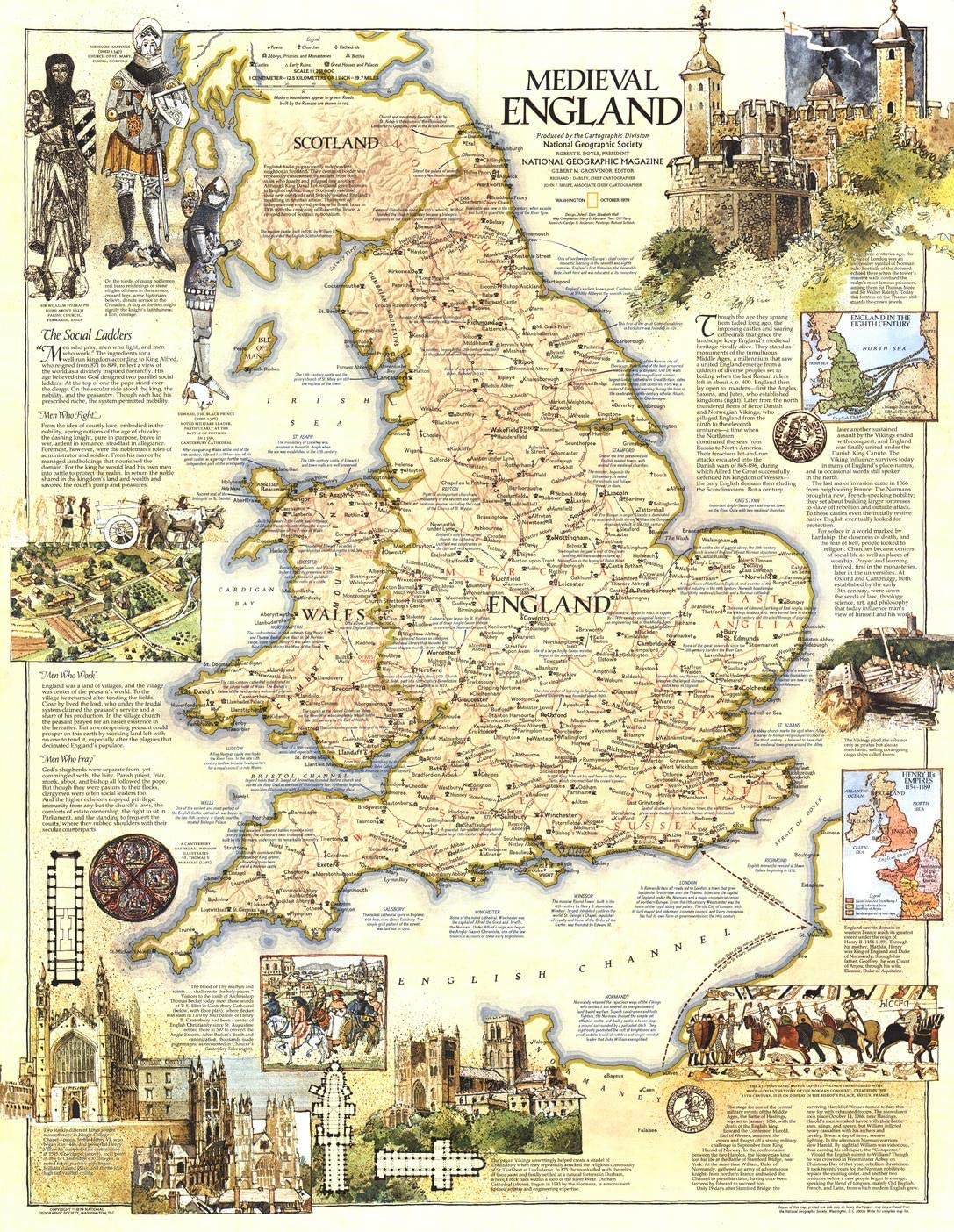
Meanwhile in 1002, back in England King Æthelred the Unready, for reasons known only to him, ordered the brutal extermination of all men, women, and children living within the Danelaw. The Danelaw was a region in England characterized by the presence of Danish law and customs, primarily encompassing the northern and eastern parts of the country. The Danelaw is a term that has been used to define this area culturally since the 10th century, when the English king Edgar decreed that the Danes living in England could exercise their rights according to their own legal frameworks, unlike those living under English law.
The extermination of Danes ordered by Æthelred the Unready is known as the St. Bryce’s Day Massacre. It was Æthelred’s desperate and merciless attempt to purge England of Scandinavian influence. At this time, long settled Danes who had made England their home for years were slaughtered. Among the countless victims was Gunhilde, the sister of Forkbeard along with her husband Pallig, an ealdorman serving under King Æthelred, and their children.
Sweyn Forkbeard had not set foot in England in nearly a decade, but the news of his sister’s tragic end brought him back. He first launched ferocious assaults on the city of Exeter and other wealthy English cities. He then sold his spoils of war in Normandy, built up his weaponry, and returned to England to gather more spoils. He devastated many parts of the south and midlands with parts of Wessex, Hampshire and Wiltshire facing the brunt of his attacks. Although Sweyn returned to Scandinavia, Viking warriors continued to attack cities throughout Great Britain after the St. Byce’s Day Massacre.

Sweyn Forkbeard invading England

Svein Forkbeard lands in England. A 15th-century manuscript. AKG Images/British Library
Under the leadership of Thorkell the Tall, the Viking warriors seized the city of Canterbury in 1011, making it their stronghold. Two years later, Sweyn Forkbeard brought a huge army of warriors from the North, briefly landed at Sandwich in modern-day Kent, and then maneuvered around the rocky coast of East Anglia, making his entrance into the mouth of the Humber River and upward along Trent. He then established an encampment in Gainsborough.
When he returned to England in 1013, English leaders bowed to Forkbeard and his power grew to such an extent that he turned over leadership of his ships and captives to his son Canute. Even though Thorkell now fought for King Æthelred and at first turned back the Vikings from London, eventually, one by one, the ancient kingdoms of England crumbled under Forkbeard’s onslaught. Many English nobles and commoners saw Sweyn as a powerful and decisive leader who could bring stability and prosperity to England, and they willingly submitted to his rule. The gates of London were thrown open to Forkbeard’s army and On Christmas Day, 1013, he declared himself King of England while Æthelred fled with his family to Normandy. Sweyn Forkbeard was now the King of Denmark, the overlord of Norway, and the Supreme Sovereign of England by Right of Conquest.


As King, Forkbeard began meticulously reorganizing his empire yet only five weeks later, he died. Many theories exist regarding his death. We’ll end with John of Worcester’s rendition:
After many cruel atrocities, which he perpetrated both in England and in other lands, the tyrant Swein filled up the measure of his damnation by daring to demand enormous tribute from the town where the incorrupt body of the precious martyr Edmund lay, a thing no one had dared to do before… He very frequently threatened that if it were not speedily paid he would destroy utterly the martyr’s church, and he would torture the clergy in various ways. In addition, he frequently disparaged the martyr himself in many ways – he dared to say that he had no sanctity – and, because there were no bounds to his malice, divine vengeance did not allow the blasphemer to live any longer.
At last, when the evening was approaching in Gainsborough, he repeated the same threats, at a time when he was surrounded by Danish troops crowded together, he alone saw St Edmund, armed, coming towards him. When he had seen him, he was terrified and began to shout very noisily, saying “Help, fellow-warriors, help! St Edmund is coming to kill me!” And while he was saying this he was run through fiercely by the saint with a spear, and fell from the stallion on which he sat, and, tormented with great pain until twilight, he ended his life with a wretched death on 3 February. Source: A Clerk of Oxford

A 13th-century depiction of Svein’s death (CUL MS. Ee.3.59, f.4v) Source: A Clerk of Oxford


Archaeologists have recently discovered human remains at Roskilde Cathedral on the site of an old wooden church, built by Harald Bluetooth. It is possible that this unidentified skeleton could be that of Sweyn. While the exact location of his burial is shrouded in mystery, the theory that he was buried at this site, within the grounds of Roskilde Cathedral, is a plausible one, according to some historical accounts BBC.
As a result of Sweyn’s sudden death, the empire that he created disintegrated almost immediately. In England, Æthelred returned from exile and ruled until his death in 1016. Likewise, the throne of Norway was returned to a native ruler. Nevertheless, Sweyn’s son, Cnut, would later resurrect his father’s empire. Cnut ruled England for much longer than his father, giving him more time to impress the English, which he did. His good deeds were recorded by English writers of that time, and, as a consequence, he is known today as ‘Cnut the Great.’